
E-PRESCRIBING FOR CONTROLLED SUBSTANCES
Prescribe Controlled Medications Safely and Securely
Combat substance abuse and meet state & federal EPCS requirements with certified e-prescribing.


Does Your State Require EPCS?
As of , Electronic Prescribing for Controlled Substances (EPCS) has been enforced by The Centers for Medicare and Medicaid Services (CMS) for all Schedule II, III, IV, and V controlled substances covered through Medicare Part D. It was originally outlined in the Every Prescription Conveyed Securely Act of 2018, and twice delayed before starting enforcement in 2023.
However, EPCS is not the only federal government program mandating e-prescribing for controlled medications.
Many prescribers are also impacted by state-level and enforcement. Providers must comply with EPCS and register with the DEA to receive an ID number under DEA Title 21, Chapter II. Compliance also requires two-factor or biometric authentication and strict safeguards for passwords.
As of , Electronic Prescribing for Controlled Substances (EPCS) has been enforced by The Centers for Medicare and Medicaid Services (CMS) for all Schedule II, III, IV, and V controlled substances covered through Medicare Part D. It was originally outlined in the Every Prescription Conveyed Securely Act of 2018, and twice delayed before starting enforcement in 2023.
Many prescribers are also impacted by state-level and enforcement. Providers must comply with EPCS and register with the DEA to receive an ID number under DEA Title 21, Chapter II. Compliance also requires two-factor or biometric authentication and strict safeguards for passwords.
EPCS Compliance Requirements for the 2026 CMS Measurement Year
- Prescribe at least 70% of qualifying Schedule II–V prescriptions electronically under Medicare Part D (including Medicare Advantage drug plans)
- Qualify for an automatic exception from CMS—with no application needed—if you write 100 or fewer qualifying Part D controlled substance prescriptions in 2026, or if you are located in a declared disaster or emergency area.
- Apply for and receive a CMS-approved waiver for 2026 if you don't meet the 70% threshold or an automatic exception. Applications are submitted through the CMS portal with a HARP account, during the fall waiver window after the measurement year ends.
- Prescriptions for patients in long-term care facilities are excluded from your count until January 1, 2028.
- Your electronic prescribing must meet DEA requirements, including certified software, identity proofing, and two-factor authentication.

Stay compliant with easy-to-use, secure, and efficient e-prescribing software
If your practice writes prescriptions (controlled or non-controlled) in a state that requires EPCS, we can get you certified in a few days. Check if your state has EPCS mandates in the clickable, interactive map below. Then, sign up for a demo of our EPCS-certified Electronic Prescribing software. View pricing and enroll
State EPCS Mandates
State PDMP Mandates

Safely prescribe medications
Prioritize patient safety by sending controlled substance prescriptions directly to the pharmacy, helping to reduce miscommunication and medication errors. Plus, access real-time medication history and automatically check for drug and allergy interactions.
Seamless PDMP Integrations
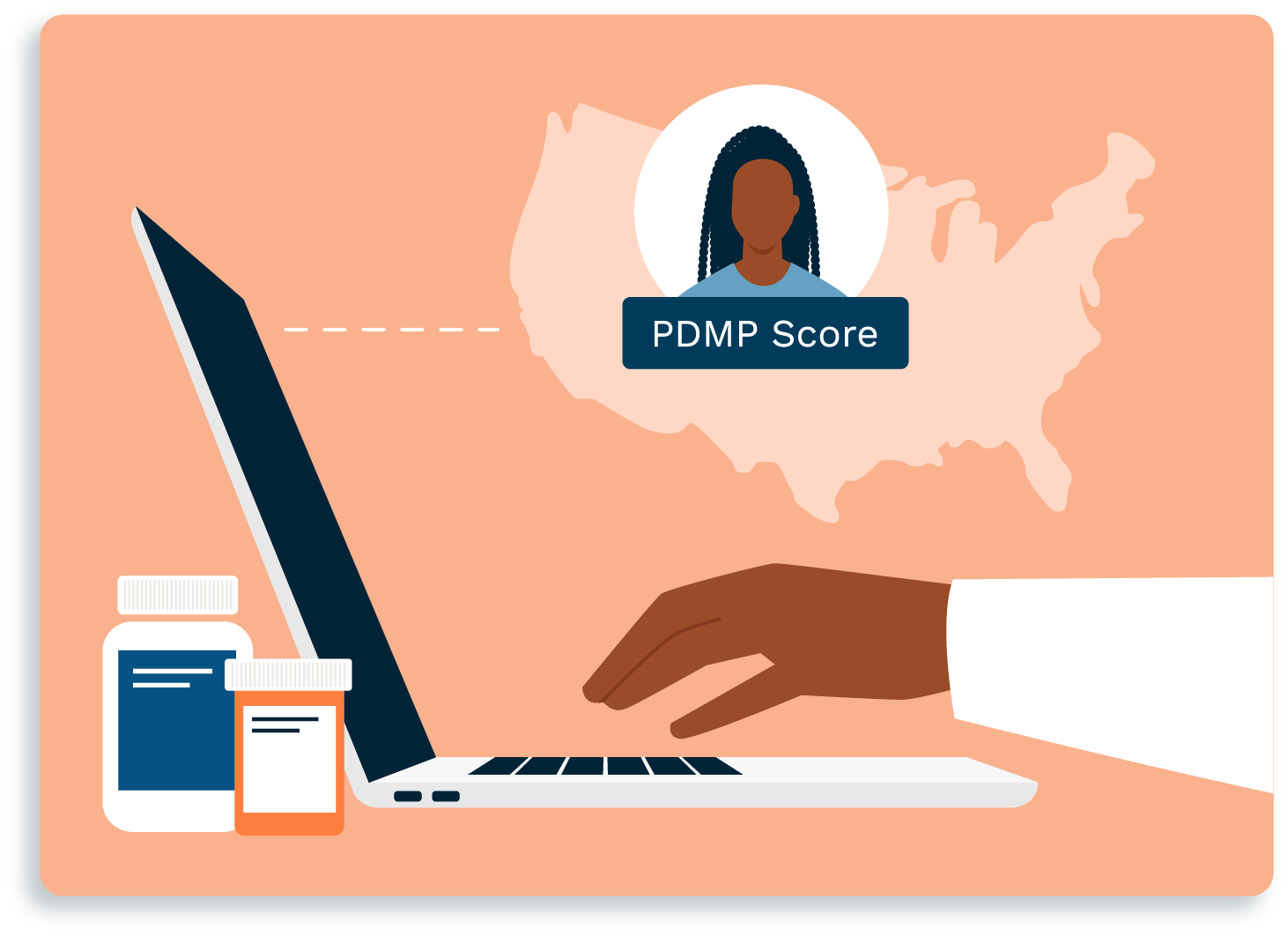
Direct, integrated access to state PDMPs and PMPs doesn’t have to be difficult. RXNT works with Bamboo Health to connect you directly to state PDMPs without needing to open a new tab or window to find prescription information. Find out your state's integration capability and funding status.

DEA-certified software
Our e-prescribing software is certified by the DEA to support Electronic Prescribing for Controlled Substances (EPCS). Our solution is backed by SureScripts, which connects with over 95% of national pharmacies.