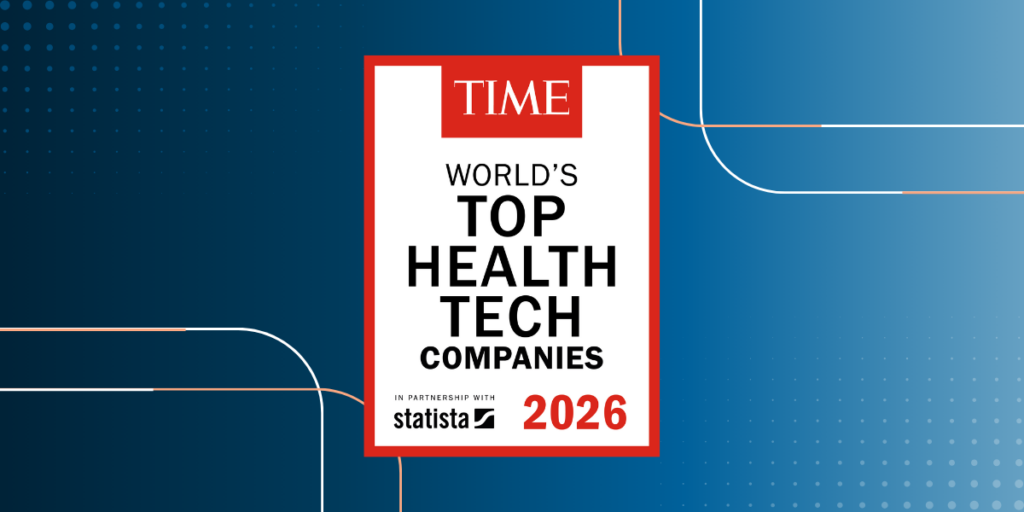
RXNT Named to TIME World's Top HealthTech Companies of 2026 for Second Consecutive Year

Find out how healthcare software that scales can optimize efficiency and help your practice thrive in a challenging landscape.
Key takeaways
- Healthcare software that scales supports growth across providers, locations, patient volumes, and specialties.
- Your current software may be hindering your growth. Look for certain features that indicate a platform can help your healthcare practice scale.
- EHR, practice management, and e-prescribing software serve distinct but interconnected functions.
- RXNT combines EHR, practice management, and e-prescribing tools in an integrated, cloud-based platform.
Please note: Feature details are based on publicly available information as of November 2026, and are subject to change. Please verify details accordingly.
Healthcare practices need scalable technology that can keep pace with changing patient volumes, expanding teams, and increasingly complex workflows. Scalable healthcare software helps grow your practice and your income. But scalable platforms also accommodate additional users, connect clinical and administrative workflows, provide useful operational insights, and adapt as your organization evolves.
What Scalable Healthcare Software Does, and Doesn’t, Look Like
Healthcare software scalability is a platform’s ability to support an organization’s changing needs without sacrificing performance or usability. Unfortunately, most organizations are stuck in their current platform’s stifling capabilities.
Here are common signs that your existing software may be limiting your growth:
- Disconnected systems. Staff switch between separate platforms to manage patient records, scheduling, prescriptions, and billing.
- Duplicate data entry. Employees repeatedly enter the same information into different applications.
- Limited reporting. Leaders can’t easily evaluate performance across providers or locations.
- Rigid workflows. The software can’t accommodate new specialties or operational requirements.
- Increasing administrative demands. Higher patient volumes create more manual work.
As practices grow, they may need to add providers, open locations, manage more appointments, or introduce new specialties. Software should accommodate these changes without requiring a complete technology overhaul. A scalable solution should offer flexibility, reliable performance, and the ability to connect with other healthcare systems. If your system is showing the above signs, you may need a better platform that can scale with your practice.
How EHR, Practice Management, and E-prescribing Work Together
Most healthcare organizations rely on three core technology solutions: EHR software, practice management software, and e-prescribing software. Each supports a different part of the patient and operational experience.
Electronic health record software
EHR software organizes patient health information, including medical histories, diagnoses, medications, allergies, and clinical notes. It gives authorized providers and staff access to information needed for clinical decision-making and care coordination.
Practice management software
Practice management software supports the administrative and financial operations of a healthcare organization. It helps staff manage scheduling, registration, billing, and payment collection. As patient volumes increase, it can be harder to coordinate these workflows manually. A centralized platform can help streamline processes and provide greater visibility into operational performance.
E-prescribing software
E-prescribing software allows providers to create and transmit prescriptions electronically. It can also provide medication histories, formulary information, and safety alerts. When e-prescribing connects directly to the EHR, providers can manage medications within the patient record instead of switching between applications.
What a Scalable Healthcare Software Solution Looks Like
Selecting healthcare software requires more than comparing feature lists. Organizations should consider their current workflows and long-term plans and look for factors such as:
- Integration
- Cloud access
- Customization
- Reporting
- Interoperability
- Implementation, training, and support
- Total cost
Best Software for Scaling Healthcare Practices
Several healthcare technology vendors offer integrated platforms designed to connect clinical, administrative, and financial workflows. While their capabilities and approaches differ, these solutions can help organizations manage more complex operations as they grow.
RXNT
RXNT offers a cloud-based healthcare software platform that combines electronic health records, electronic prescribing, practice management, medical billing, and scheduling. Its full suite uses a shared database to connect front-office and clinical workflows, allowing information to move from patient scheduling and check-in through clinical documentation, prescriptions, billing, and payments. The EHR includes customizable charting, patient histories, prescription information, and patient portal access. The practice management products support appointment scheduling, patient enrollment, claims management, denial workflows, and revenue cycle reporting. Its e-prescribing solution includes EPCS, medication history, drug and allergy interaction checks, formulary information, and electronic prior authorization.
RXNT also offers mobile applications for clinical and administrative tasks, customizable reporting, multi-location support, and onboarding, training, and data transfer. Organizations can select individual products or adopt the full suite for a more connected technology environment.
athenahealth
athenahealth combines electronic health records, practice management, revenue cycle management, and patient engagement in one platform. Its EHR supports clinical documentation and information exchange, while practice management tools help automate billing, coding, claims review, and denial follow-up. The platform also includes a patient portal and mobile app for appointment management, access to health information, and secure communication. athenahealth’s network connects practices with laboratories, pharmacies, and other healthcare organizations, supporting information exchange across care settings.
eClinicalWorks
eClinicalWorks offers cloud-based EHR and practice management solutions alongside patient engagement, interoperability, and revenue cycle management tools. Its platform supports clinical documentation, prescribing, scheduling, billing, and reporting.
A unique feature of eClinicalWorks is its PRISMA health information search engine, which brings patient records from participating healthcare organizations into a consolidated view, and the healow ecosystem, which supports online scheduling, digital check-in, patient portals, telehealth, and automated communication. Specialty-specific workflows and AI-powered documentation tools provide additional options for organizations with evolving clinical needs.
NextGen Healthcare
NextGen’s EHR and practice management solutions with workflows are designed for a range of medical specialties and organizational structures. Its platform connects clinical documentation, e-prescribing, scheduling, billing, claims processing, and revenue cycle management.
Patient engagement tools include online scheduling, digital intake, appointment reminders, secure messaging, and patient payment options. Reporting and analytics help organizations monitor operational and financial performance, while specialty-specific templates and configurable workflows support different clinical environments.
Each platform approaches integration and scalability differently. Organizations should compare the available features, implementation requirements, interoperability capabilities, and total cost of ownership against their current workflows and long-term plans.
RXNT is a particularly strong option for practices seeking EHR, practice management, and e-prescribing capabilities in one connected platform. To scale your practice, schedule a free demo today.
Frequently Asked Questions
What is the best healthcare software for a growing practice?
The best solution depends on an organization’s specialty, workflows, locations, and operational priorities. RXNT, athenahealth, eClinicalWorks, and NextGen Healthcare offer integrated clinical and administrative capabilities worth evaluating.
How can I scale my healthcare practice?
Scaling requires preparing for increased patient volumes, additional providers, and more complex workflows. Choosing scalable healthcare software, standardizing processes, and investing in staff and patient engagement can help support sustainable growth.
What are some ways to keep my data organized as my healthcare practice scales?
Establish consistent documentation practices, standardize data entry, and use appropriate access controls. Integrated healthcare software can connect patient records, scheduling, clinical documentation, prescriptions, and billing, which reduces duplicate entry and improves information consistency.