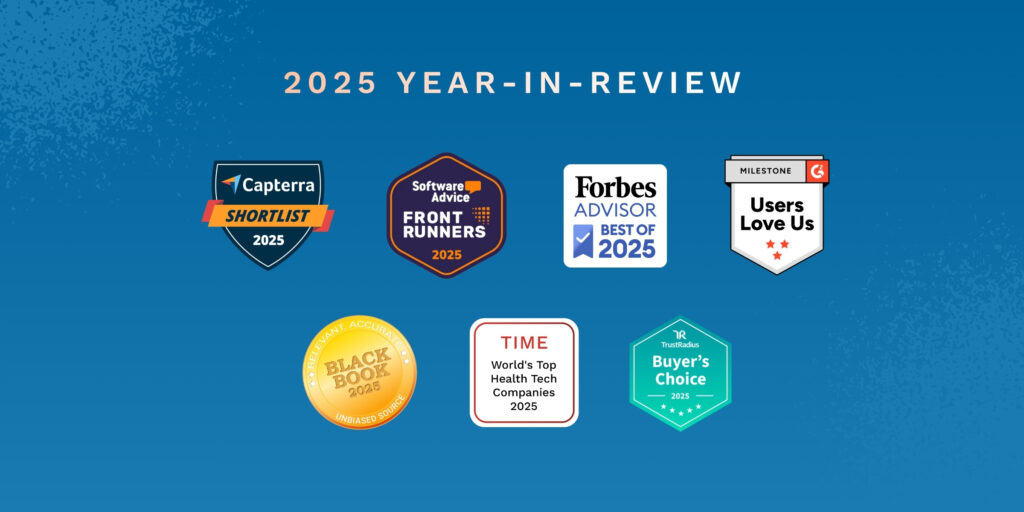
RXNT Named to TIME World's Top HealthTech Companies of 2026 for Second Consecutive Year

More patients are turning to AI for health information, reshaping clinical visits before they even begin. Practices that embrace AI-informed patients strategically can strengthen relationships while improving care outcomes.
Key takeaways
- Roughly two-thirds of adults have used AI, and 17% turn to AI each month for health information and advice.
- Practices need to align care teams and workflows to respond to AI-informed patients consistently and confidently.
- Privacy concerns and the risk of errors or misinformation remain high, making it critical for care teams to respond thoughtfully.
ChatGPT and other AI chatbots are transforming patient visits. Providers are now regularly navigating AI-informed questions, shifting expectations, and more engaged (and sometimes misinformed) patients.
Equipping your practice with the right strategies, from training healthcare teams to guiding patients toward vetted AI options, can turn this challenge into an opportunity to deepen trust and collaboration.
Is AI Reshaping Patient Visits Forever?
About two-thirds of adults have used AI, with 17% turning to it monthly for health advice, making AI-informed visits the new normal. Patients now arrive with AI-generated self-diagnoses and questions often pulled up on their phones just moments before the visit. Responding to AI-generated health information is now essential to stronger relationships and long-term growth.
Why Is This Shift Happening?
Patients have long relied on digital health resources, but AI now offers instant, conversational answers available anytime, anywhere. Younger generations are prioritizing health and wellness more than previous generations, driving even higher adoption.
How To Prepare for AI-Informed Patients
Preparing for this new dynamic is key to maintaining efficiency, consistency, and patient trust. A few ways to prepare for AI-informed patients include:
- Updating intake forms to include AI usage questions
- Developing empathetic, open-ended scripts providers can use in real time
- Sharing AI limitations fact sheets with patients
- Scheduling regular team meetings to discuss experiences and strategies
Approach AI-Informed Patients With Curiosity
Rather than dismissing AI-generated information or becoming defensive, which can weaken trust and hurt your patient-provider relationship, approach it with curiosity. Exploring what patients searched for and why can reveal deeper insights into their expectations and decision-making.
Some benefits of patients being AI-informed include:
- Building patient confidence
- Uncovering unshared health details
- Opening new and collaborative health discussions
How Can Care Teams Best Respond to AI-Generated Health Information?
How clinicians and staff respond to AI-generated health information matters. Care teams that take an active, patient-centered approach—grounded in curiosity, validation, and guidance—can strengthen trust and shared decision-making.
- Understand what the patient consumed: You first need to know where patients are coming from. Ask them about the tools they used and the specific prompts or questions they asked. These insights can help you determine how it’s shaping their expectations.
- Validate their efforts: It’s important to acknowledge your patients’ initiative to learn more about their health. Simple phrases like “It’s great that you took time to look into this” go a long way in building trust and showing that you’re open to their efforts.
- Evaluate the AI claims: Since errors and hallucinations are common in generative AI, it’s crucial to evaluate and verify the claims it generates. Pair reputable medical websites or published studies and journal articles with your own knowledge and experience to validate or dismiss the claims.
- Guide patients to correct information: If the AI-generated information is incorrect, oversimplified, or not applicable to your patient’s circumstances, gently explain this to them. Then, direct patients to evidence-based sources with accurate information. You can also educate patients to ask AI to cite its sources as they use it. Lastly, encourage patients to always confirm AI-generated information with their provider.
How Can We Prepare Health Teams for AI-Informed Patients?
AI has supported healthcare behind the scenes for years, powering imaging analysis and risk prediction before generative AI chatbots were in the picture. Now, as more patients are coming to visits with AI-generated questions, it’s time to align your care team on how to discuss AI tools with patients and set visit expectations.
Train Healthcare Teams
When it comes to patient satisfaction, consistency in care is key. Alignment starts with training teams to deliver consistent messaging, set expectations, and confidently address AI-related questions. Focus your training on:
- Common AI tools patients use
- AI’s strengths and weaknesses
- Safety and accuracy risks (hallucinations, misinformation) AI poses
- Types of questions patients ask AI
- Using AI research as a jumping-off point
Offer Patients Vetted AI Recommendations
Build a culture of engagement by educating patients on how to use AI safely and effectively. That includes providing resources on how they can verify claims and avoid misinformation. You can also recommend a list of AI-powered tools that meet your organization’s standards for privacy and accuracy. And, it’s important to reinforce that AI is great for supplemental medical information, but it shouldn’t replace medical visits or personalized, professional knowledge.
View AI-Informed Patients as an Opportunity
AI-informed patients aren’t obstacles in care; they’re collaborators. These patients are often more engaged and proactive in their care—but they need guidance to translate information into appropriate action. By embracing their research as a starting point, you can start deeper conversations and co-create care plans they’re more likely to follow.
From AI Health Question to Better Patient Outcomes
Generative AI isn’t a passing trend; it’s a growing part of how patients seek and interpret health information. When practices acknowledge the benefits of AI-informed patients and pair that with strategies to reduce privacy risks and misinformation, provider-patient relationships strengthen.
Solutions like RXNT tie it all together with technology that streamlines workflows and improves the patient experience. Explore how RXNT can support your team and AI-informed patients with a free demo.
FAQs
How can I turn AI advice into better visits?
Start by being open and curious. Ask what their concerns are and what AI suggested. These insights can enhance conversations and collaboration in care.
What if clinicians or staff don’t feel comfortable with AI-informed care?
Turn uncertainty into confidence by training staff on AI basics and providing clear guidance on how to respond to patient questions.
How do I correct AI misinformation or hallucinations without dismissing the patient?
Always validate their effort first, then educate them. For example, “It’s smart to research that, but AI tends to generalize. Your labs and medical history indicate something else.”