RXNT Named to TIME World's Top HealthTech Companies of 2026 for Second Consecutive Year
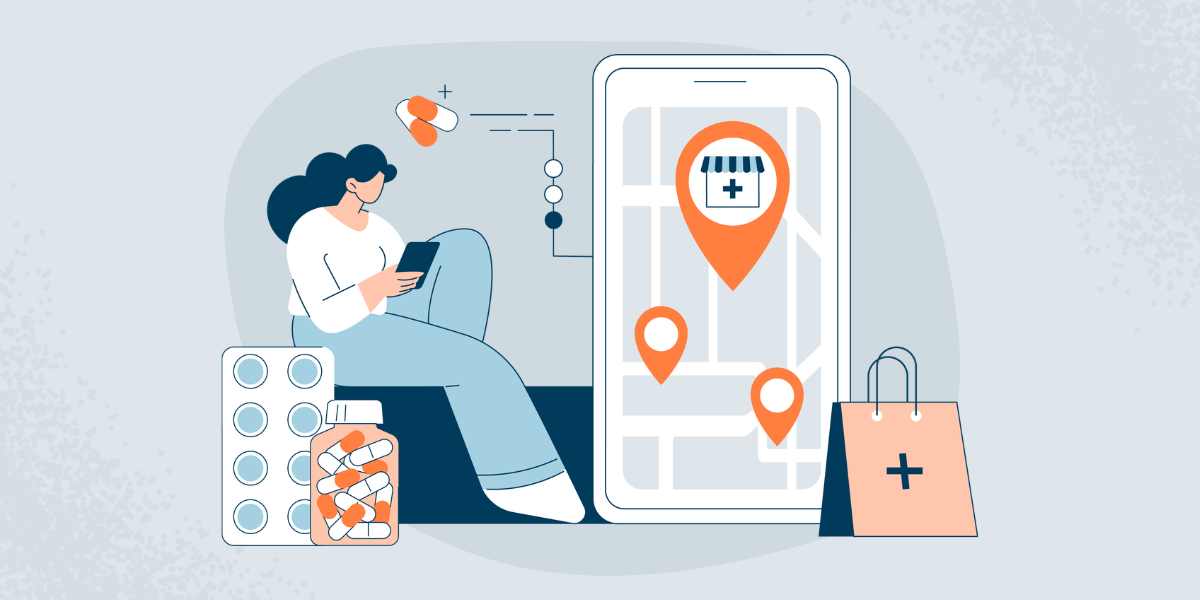
As large pharmacy chains continue closing locations and staffing shortages reduce capacity, the gap between where patients live and where they can access medications is widening. Digital pharmacy services offer solutions to pharmacy deserts to improve patient adherence and outcomes.
Key takeaways
- Pharmacy deserts are communities where residents lack reasonable access to a retail pharmacy.
- Reduced pharmacy access directly contributes to lower medication adherence, delayed treatment initiation, and increased hospitalizations.
- Digital pharmacy solutions, including mail-order pharmacy, telepharmacy, and home medication delivery, are expanding access for patients.
For millions of Americans, getting a prescription filled is not as simple as driving a few minutes to the nearest pharmacy. In communities across the country, that pharmacy does not exist. For patients managing chronic conditions, recovering from a procedure, or starting a new therapy, that absence has real and measurable consequences.
Pharmacy deserts are a growing public health challenge. As traditional pharmacy access shrinks, digital pharmacy services are filling the gaps.
Pharmacy Deserts Explained: Who They Affect and Why It Matters
Some researchers define pharmacy deserts as areas where the travel time to the nearest pharmacy exceeds the supermarket access time for that region.
Pharmacy deserts disproportionately exist in rural or historically marginalized neighborhoods, compounding already-existing health inequities in those communities. For patients who depend on timely access to medications, proximity to a pharmacy is directly connected to whether treatment actually begins and continues.
Why the Retail Pharmacy Model Is Leaving Some Communities Behind
Pharmacy deserts aren’t a fixed problem. They are expanding and constantly shifting, driven by a combination of forces reshaping the retail pharmacy landscape.
Large pharmacy chains have been closing locations at an accelerating pace. CVS, Walgreens, and Rite Aid have each announced significant store closure programs in recent years, with many of those closures concentrated in lower-income urban neighborhoods and rural communities where margins are thinner and foot traffic is lower.
The problem is compounded by staffing shortages. Pharmacist burnout and workforce gaps have forced some locations to reduce hours, limit services, or close entirely. The result is a widening gap between where patients live and where they can access the medications they need.
How Reduced Pharmacy Access Affects Patient Outcomes
When patients cannot easily access a pharmacy, the downstream effects show up across multiple dimensions of care.
Medication adherence declines
Patients who face significant barriers to accessing a pharmacy are more likely to delay filling prescriptions, skip doses, or abandon therapy entirely. For chronic conditions like diabetes, hypertension, and heart disease, adherence gaps translate directly into worse health outcomes over time.
Hospitalizations increase
Medication nonadherence is one of the leading contributors to preventable hospitalizations. When pharmacy access barriers interrupt treatment, patients are more likely to experience disease exacerbations that require emergency or inpatient care.
Treatment gets delayed
For patients starting a new therapy, the time between receiving a prescription and filling it is a critical window. Pharmacy deserts extend that window, delaying therapy initiation in ways that can affect treatment effectiveness.
Why Digital Pharmacies Are Shifting From a Nice-to-Have to a Healthcare Essential
The growth of pharmacy deserts has accelerated interest in digital pharmacy solutions that can reach patients regardless of where they live. Several factors are driving adoption.
The most direct driver is simple necessity. When the nearest pharmacy is an hour away or has reduced its hours to the point of inaccessibility, patients need an alternative path to their medications. Digital pharmacy services provide that path.
Aging populations are also a significant factor. Older adults, who typically carry the highest medication burden, are often the least able to travel to a pharmacy and the most likely to benefit from home delivery and telepharmacy services that bring pharmacy care directly to them.
Better care coordination is another driver. Digital pharmacy platforms that communicate with prescribers and EHR systems create a more connected medication management experience, giving clinical teams better visibility into whether patients are receiving and taking their medications.
How Different Digital Pharmacy Models Are Closing the Access Gap
Three primary models are expanding medication access for patients in pharmacy deserts and beyond.
- Mail-order pharmacy
Mail-order pharmacies allow patients to receive a supply of their medications at home, typically a 90-day supply, without a physical pharmacy visit. - Telepharmacy
Telepharmacy connects patients with licensed pharmacists via video or phone for counseling, prescription verification, and medication management support. - Home medication delivery
Local or regional pharmacy partners can provide same-day or next-day home delivery for patients who need medications quickly but cannot easily travel to pick them up.
The Patient-Level Impact of Overcoming Pharmacy Access Barriers
The patient-level benefits of digital pharmacy services map directly onto the problems pharmacy deserts create.
Improved access is the most fundamental benefit. Digital pharmacy models remove geography as a barrier to medication access, making it possible for patients in rural or underserved communities to receive the same quality of pharmacy service as patients in well-resourced urban areas.
Greater convenience reduces the logistical friction that causes adherence to break down. When medications arrive at the door, patients do not have to coordinate transportation, take time off work, or navigate limited pharmacy hours to stay on their treatment plan.
Better adherence is the downstream outcome. Research consistently shows that reducing access barriers improves medication adherence, and improved adherence translates into better disease management, fewer hospitalizations, and lower total cost of care over time.
What Healthcare Organizations Can Do to Close the Pharmacy Access Gap
RXNT’s integrated platform supports the connected workflows that make digital pharmacy coordination more manageable for practices and more seamless for patients. To learn how RXNT can support your organization’s medication management and care coordination needs, schedule a free demo today.
FAQs
What is a pharmacy desert?
A pharmacy desert is generally defined as a community that is both low-income and lacks reasonable geographic access to a retail pharmacy, with specific distance thresholds varying depending on whether the area is urban or rural.
How do digital pharmacy services address the needs of elderly or low-tech patients?
Most established mail-order and telepharmacy services offer phone-based access in addition to online options, reducing the digital literacy barrier for older adults.
How can healthcare organizations evaluate whether digital pharmacy services are right for their patient population?
Start by identifying where access gaps already exist within your patient population. Organizations serving rural, elderly, or transportation-limited patients are likely to see the strongest impact, and reviewing pharmacy fill rates and adherence data for high-risk populations can help prioritize where to focus.